
Elevating behavioral research
Elevating behavioral research
New lab accelerates experiential learning, research, and collaboration
Cutting-edge business research on how people think, feel, and behave has a home at the new Quinlan School of Business Behavioral Lab at Loyola University Chicago. The lab enables faculty and student researchers from Quinlan and partner universities to conduct innovative scholarly research on business-related topics involving human decision-making and behavior.
The behavioral lab and the innovative classes it supports combine to offer a powerful research and educational experience for Quinlan students.
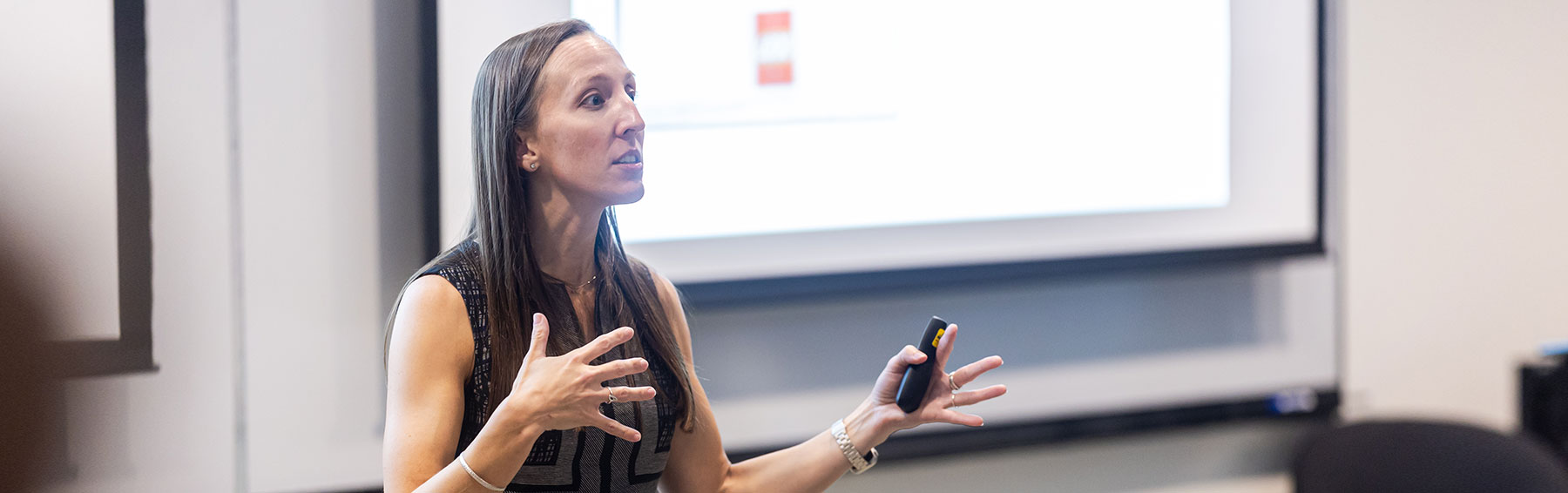
“It’s a wonderful resource that provides the means to collect data on site, and increases the research production at Quinlan.” Brittney Bauer, assistant professor of marketing and Behavioral Lab director
Bauer envisioned and created the behavioral lab to further expand the experiential learning and data-based aspects of the Quinlan curriculum. Researchers conduct studies, often with student assistance, and there is both an undergraduate and graduate course specifically tailored for behavioral research engagement. Much of the research involves surveys or experimental studies, performed in a space that is flexible and adaptable to the needs of the research.
“We’re very interdisciplinary,” Bauer said. “We’ve had marketing, international business, finance, entrepreneurship and management studies. Anyone who studies how humans think and respond in a variety of contexts can use the lab.”
Where brilliance meets purpose

Global Perspective
Transforming the world through marketing
Professor Clifford Shultz’s course taking graduate students to Southeast Asia provides the students a capstone like no other.
Read about a transformative course
Innovative Research
Breaking ground with biometrics
Associate Professor Dinko Bačić’s UX and Biometrics Lab is at the forefront of bringing professional research tools to business students.
Read about biometrics at Quinlan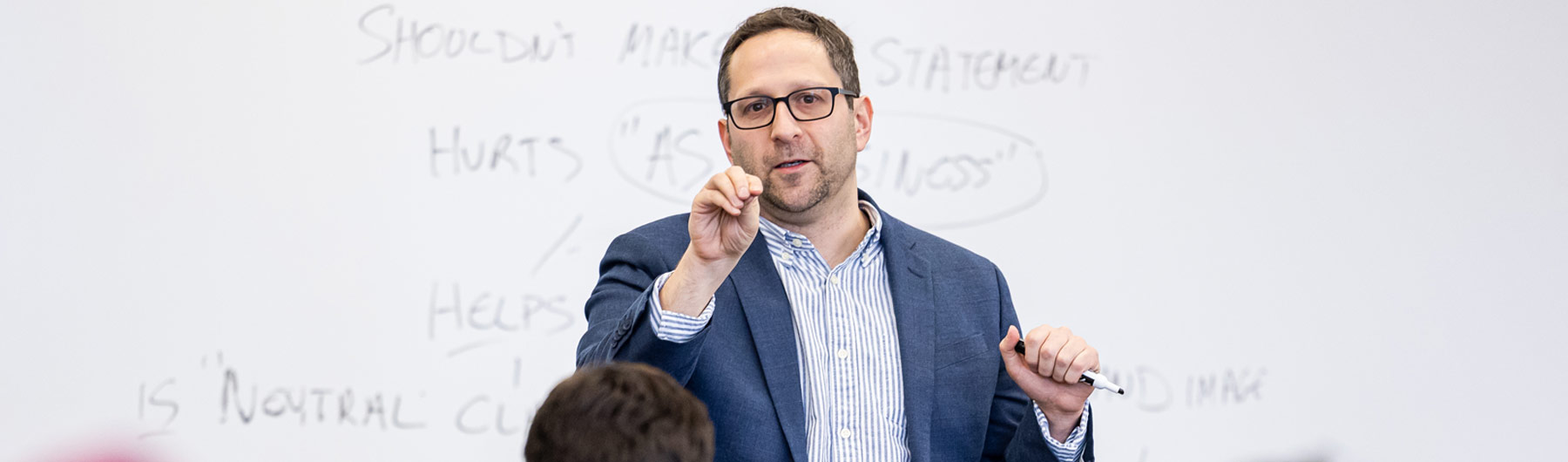
Business Ethics
Leadership tools for the real world
Quinlan’s long legacy of leadership in business ethics continues in Associate Professor Abraham Singer’s courses and research.
Read about ethics in the curriculumIn the 2024-25 academic year, a total of 668 students from 15 different courses used the Quinlan School of Business Behavioral Lab. In addition, 17 researchers from across seven universities also took advantage of the lab’s resources, completing 27 studies in four different disciplines. The partnerships that Bauer has forged with other universities are another key strength.
“It’s a unique aspect of our lab in that we are following our Jesuit principles of helping others. We now have agreements with Pepperdine University and Saint Louis University, where their professors can come in and do research at any time,” Bauer said. “We can all enlarge and increase the diversity of our subject pool, and it’s a way of giving back to each other along the way.”
Telling the right story
To capitalize on the potential of the behavioral lab, Bauer and her colleague Arilova Randrianasolo, assistant professor of marketing, created an innovative Research, Insights & Storytelling course that leans into the resources of the behavioral lab. The course gathers data-driven consumer insights via both qualitative and quantitative research methods, and then translates the findings into market strategies through storytelling based on consumers’ welfare.
“Our goal is to help decision-makers improve performance and the lives of our consumers in a way that is both profitable and responsible, with empathy and understanding for our consumers. Our students are entering the workforce equipped to design, collect, and analyze data that matters.” Brittney Bauer, assistant professor of marketing and Behavioral Lab director
The key to the storytelling method is to flip the script
“It’s a familiar arc—the hero’s journey—but most companies think of themselves as the main character. They’re not—the consumer is,” Bauer said.
Students work through a step-by-step framework, assessing what the consumer’s problem is, finding the pain point, and figuring out how to help them.
“They meet a guide, and that’s the brand,” Bauer said. “The brand has to have a plan to help the consumer reach the conclusion they want, which could be a transformational experience, improving their lives, providing convenience, or making their lives more fulfilling. Whatever it is, we look at the data we need to collect and keep it focused on the consumer.”
Maya Horton is a student in the MS in Marketing program at Quinlan, who works as the lab attendant for the Quinlan School of Business Behavioral Lab. She took the storytelling course with Bauer and found a deeper understanding of both marketing and the subtleties behind data.
“The impact of storytelling is imperative when it comes to contextualizing data points and more complex research findings, because it provides an avenue for curating the larger picture,” Horton said.
Making coursework experiential
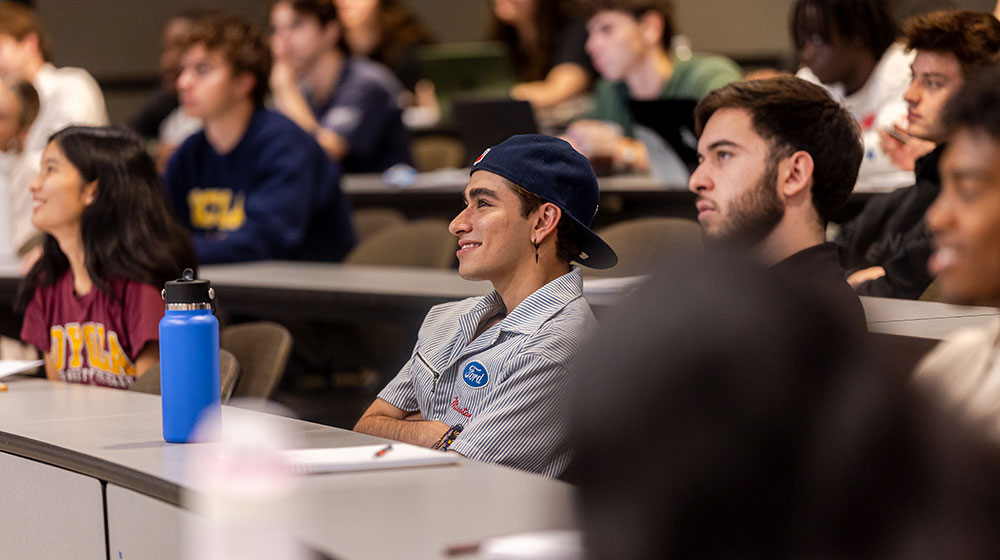
Horton also benefited from the hands-on nature of the course. “I am an experiential learner, so I learn best by doing and applying what I am learning. I used all the aspects of our course in a final research study, where my group and I got to create our own survey and cultivate a testing pool of participants and present our findings.”
Bauer said most of the students in her course are in the workforce and find real and immediate value in the skills they are learning.
“They put what they learn into action right away,” she said. “They'll come into class and say they tried something at work that they had learned the previous week in class, and it went really well. Or if it didn’t, then we talk about that, and how they could do it differently and better.”
Together, the graduate coursework and participation in the Quinlan School of Business Behavioral Lab create a powerful synergy, equipping students with hands-on research experience and the analytical tools needed to turn behavioral insights into meaningful, market-ready strategies.
Bauer envisioned and created the behavioral lab to further expand the experiential learning and data-based aspects of the Quinlan curriculum. Researchers conduct studies, often with student assistance, and there is both an undergraduate and graduate course specifically tailored for behavioral research engagement. Much of the research involves surveys or experimental studies, performed in a space that is flexible and adaptable to the needs of the research.
“We’re very interdisciplinary,” Bauer said. “We’ve had marketing, international business, finance, entrepreneurship and management studies. Anyone who studies how humans think and respond in a variety of contexts can use the lab.”
In the 2024-25 academic year, a total of 668 students from 15 different courses used the Quinlan School of Business Behavioral Lab. In addition, 17 researchers from across seven universities also took advantage of the lab’s resources, completing 27 studies in four different disciplines. The partnerships that Bauer has forged with other universities are another key strength.
“It’s a unique aspect of our lab in that we are following our Jesuit principles of helping others. We now have agreements with Pepperdine University and Saint Louis University, where their professors can come in and do research at any time,” Bauer said. “We can all enlarge and increase the diversity of our subject pool, and it’s a way of giving back to each other along the way.”
Telling the right story
To capitalize on the potential of the behavioral lab, Bauer and her colleague Arilova Randrianasolo, assistant professor of marketing, created an innovative Research, Insights & Storytelling course that leans into the resources of the behavioral lab. The course gathers data-driven consumer insights via both qualitative and quantitative research methods, and then translates the findings into market strategies through storytelling based on consumers’ welfare.
The key to the storytelling method is to flip the script
“It’s a familiar arc—the hero’s journey—but most companies think of themselves as the main character. They’re not—the consumer is,” Bauer said.
Students work through a step-by-step framework, assessing what the consumer’s problem is, finding the pain point, and figuring out how to help them.
“They meet a guide, and that’s the brand,” Bauer said. “The brand has to have a plan to help the consumer reach the conclusion they want, which could be a transformational experience, improving their lives, providing convenience, or making their lives more fulfilling. Whatever it is, we look at the data we need to collect and keep it focused on the consumer.”
Maya Horton is a student in the MS in Marketing program at Quinlan, who works as the lab attendant for the Quinlan School of Business Behavioral Lab. She took the storytelling course with Bauer and found a deeper understanding of both marketing and the subtleties behind data.
“The impact of storytelling is imperative when it comes to contextualizing data points and more complex research findings, because it provides an avenue for curating the larger picture,” Horton said.
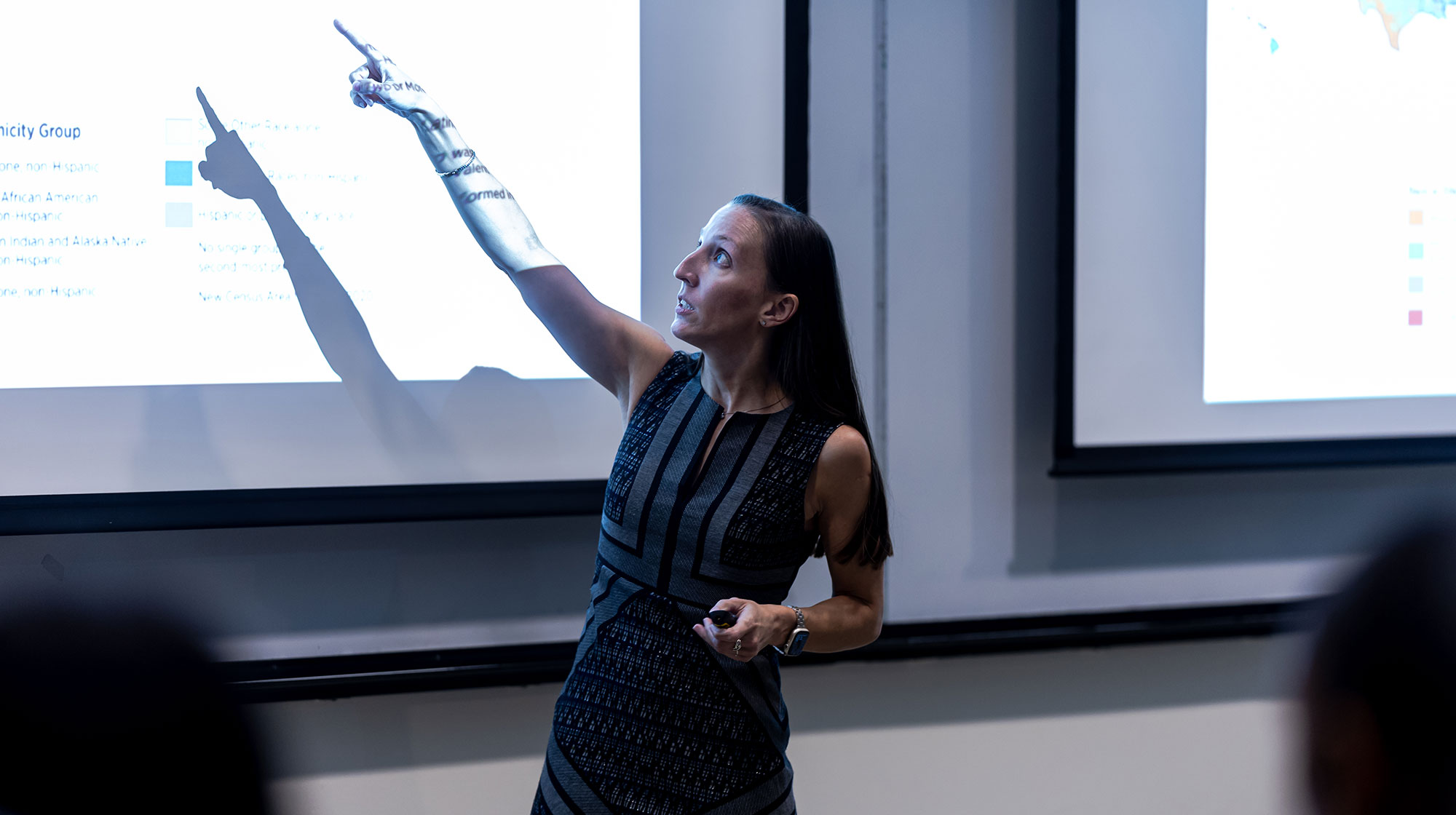
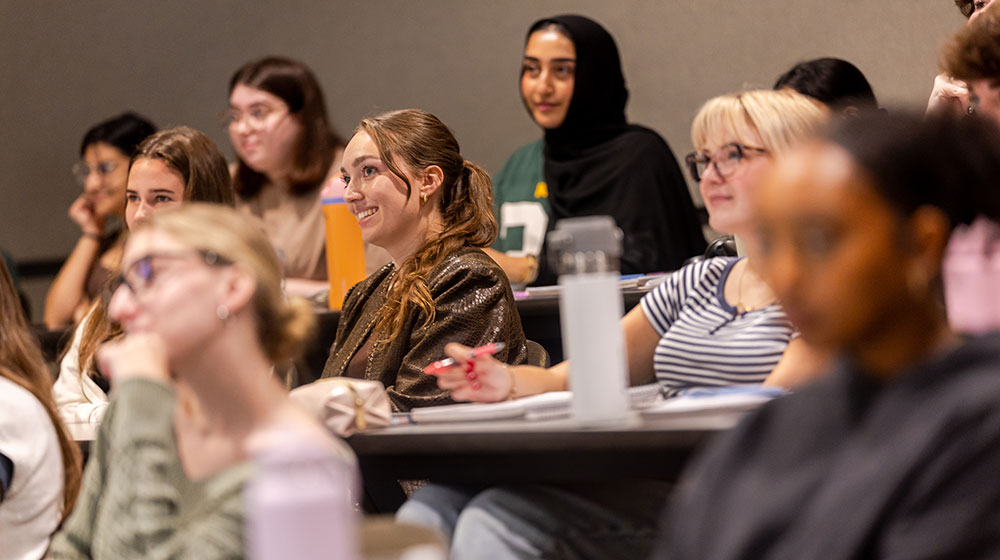
Brittney Bauer, assistant professor of marketing and Behavioral Lab director (top), teaches marketing courses at the Quinlan School of Business.
Making coursework experiential
Horton also benefited from the hands-on nature of the course. “I am an experiential learner, so I learn best by doing and applying what I am learning. I used all the aspects of our course in a final research study, where my group and I got to create our own survey and cultivate a testing pool of participants and present our findings.”
Bauer said most of the students in her course are in the workforce and find real and immediate value in the skills they are learning.
“They put what they learn into action right away,” she said. “They'll come into class and say they tried something at work that they had learned the previous week in class, and it went really well. Or if it didn’t, then we talk about that, and how they could do it differently and better.”
Together, the graduate coursework and participation in the Quinlan School of Business Behavioral Lab create a powerful synergy, equipping students with hands-on research experience and the analytical tools needed to turn behavioral insights into meaningful, market-ready strategies.